Beyond the Hotspot: 5 Ways the Sovereign Stack is Redefining the High-End Nomad Life

- Introduction: The End of “Connectivity Chaos”
For the modern nomad—the remote executive, the entrepreneur, or the road-schooling family piloting a $150,000 Super C motorhome—connectivity is a prerequisite for existence, not an optional amenity. Yet, even within the $140 billion RV market, most high-net-worth travelers are trapped in “Connectivity Chaos.” This is a state of perpetual frustration defined by fragmented hotspots, inefficient AC inverter drain, and fragile DIY setups that fail the moment a tree canopy obstructs a satellite’s view.
The Sovereign Stack Consortium—a strategic alliance between DeReticular, Pawnee Mobility, Trifi Wireless, and InVentures Capital—is ending this era of fragmentation with its Generation 5 (Gen 5) Systems Architecture. This is a decisive pivot from “disparate hardware” to vertically integrated “sovereign nodes.” For the affluent 35–65 demographic operating on a “buy once, cry once” philosophy, Gen 5 represents the transition from being a consumer of fragile services to being the operator of an unbreakable infrastructure.
- The Battery-Free Revolution: Engineering for Extreme Heat
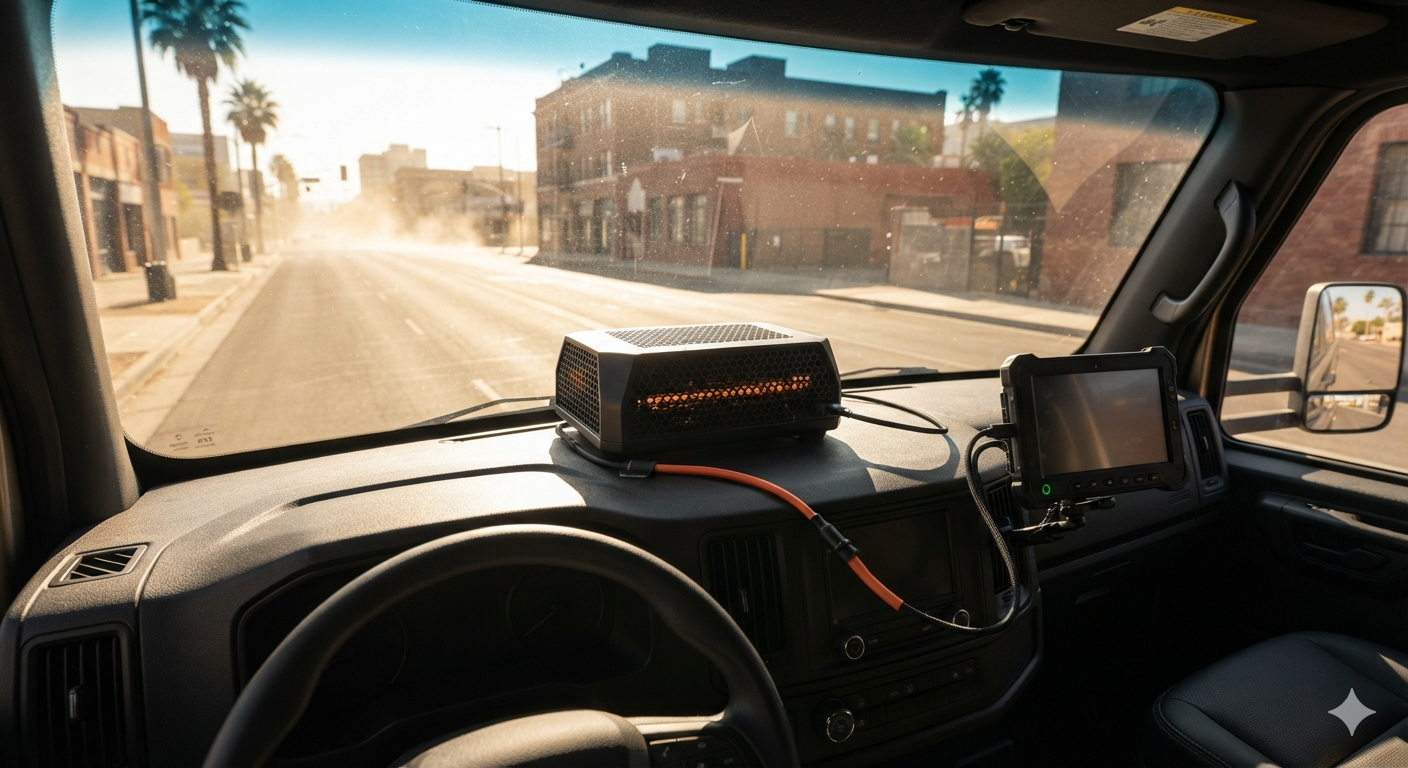
In a move that sounds counter-intuitive to anyone used to consumer gadgets, DeReticular’s Gen 5 WISP-in-a-Box series (Product 1 and Product 2) has been “purged” of chemical batteries. In professional mobile environments, batteries are not an asset; they are a liability. In unventilated engine compartments or behind windshields where temperatures can soar to 60°C, lithium-ion batteries melt, swell, or ignite.
To achieve true thermal survival, DeReticular utilizes a Battery Elimination Circuit (BEC). In the workshop, technicians bridge a 10kΩ spoofing resistor between the BSI pin and the Negative (-) battery terminal. Combined with a Mini-360 DC-DC Buck Converter, this “tricks” the hardware into drawing power directly from the vehicle’s 12V–48V DC bus. This direct-to-12V framework eliminates the 20–30% energy loss typical of DIY setups that rely on inefficient AC inverters, creating a 100% solid-state device that thrives in environments that would destroy a standard router.
“One Unit. Dual WAN. Zero-Latency Pivot.”
- The “Sat-Cellular” Combustion Engine: Sub-Millisecond Failover
While Product 1 (the $1,497 Tactical Gateway) provides a secure entry point, Product 2 (the $4,997 Dual-WAN Engine) introduces “Hybrid Fusion.” This technology blends high-speed Starlink satellite data with multi-carrier cellular bonding into a single, cohesive communications pipe.
The strategic advantage lies in the pfSense routing layer. Most consumer “failover” routers take 10 to 30 seconds to recognize a lost connection—an eternity that drops Zoom calls and kills remote desktop sessions. The WISP-in-a-Box LTE executes sub-millisecond packet-level failover. This is a game-changer for mission-critical activities, such as high-stakes executive negotiations or Beyond Visual Line of Sight (BVLOS) drone telemetry, where a single dropped packet can mean a failed mission.
- Rotary Power: The Return of the Wankel Engine
Unbreakable connectivity is worthless without a power source that matches its reliability. The Kinetic Power Sector (Product 4 and 5) replaces heavy, vibrating diesel generators with the Pawnee Power 150cc Rotapower Wankel engine. This liquid-cooled, multi-fuel rotary unit offers a radical leap in power density.
Traditional Power Solution Gen 5 Pawnee Solution
Inefficient AC Inverter drain; high battery overhead Direct-to-12V/48V efficiency; DC-native charging
Heavy weight and excessive chassis vibration Lightweight, ultra-quiet 150cc Rotapower Wankel
Bulky, standalone “noisy” generators High-density, modular energy blocks
Frequent maintenance; fuel-specific (Diesel/Gas) Multi-fuel versatility; integrated LFP Range Extender
This is best exemplified in the Product 5 Dune Buggy. Rather than relying solely on a static battery bank, the vehicle uses the Wankel engine as an automatic range extender, recharging its high-density LFP batteries to ensure off-grid mobility is never tethered to a charging station.
- Air-Gapped Intelligence: AI That Doesn’t Need the Cloud
“Product 3: WISP-in-a-Box Agentic” marks the arrival of the air-gapped edge-AI. While most “smart” devices leak data to the public cloud, the Gen 5 Agentic core runs entirely offline to protect sensitive scheduling and mission data.
Utilizing the “Locutus Ledger,” these units enable Spherical Vehicle Synchronization. In a multi-vehicle expedition—a flagship motorhome paired with scout vehicles and reconnaissance drones—AI agents manage Machine-to-Machine (M2M) communications and autonomous user reservations. Even when fully offline or in electronically jammed environments, the ledger keeps the entire fleet “on the same page,” synchronizing logistics and telemetry without a single byte ever touching a third-party server.
- “Ogre Skin” and the Sovereign Factory: Small-Batch Ruggedization
The Gen 5 portfolio is born in the “Sovereign Factory,” a high-precision, five-station assembly workflow that ensures industrial-grade reliability:
- Station A (The Boneyard): Intake, triage, and software unlocking.
- Station B (The Forge): 3D printing of the Nomad Shells—honeycomb-ventilated enclosures designed for thermal management.
- Station C (The Operating Table): Precision soldering of the BEC and the 10kΩ resistors.
- Station D (The Gauntlet): QA “smoke tests” and 30-minute thermal burn-in at 40°C.
- Station E (The Outpost): Final kitting and dispatch.
While the WISP units use the ventilated Nomad Shells for cooling, the heavy-duty Product 6 TAV and Pawnee Power Hub are wrapped in “Ogre Skin”—a polymer-composite armor that protects vital systems from physical hazards and extreme humidity. This small-batch approach allows for application-specific pre-configuration; whether you are deploying a maritime rig or an agricultural robotics fleet, the hardware arrives pre-tuned for your specific environmental stress.
- Conclusion: Becoming a Sovereign Node
The Generation 5 architecture represents a fundamental shift in the nomadic lifestyle. It is a transition from being a passenger in a fragile digital ecosystem to becoming a Sovereign Node—an independent, hardened entity capable of operating anywhere.
What began as a solution for the high-end RV market is already scaling into the marine/yachting sector and first-responder command units. As our global infrastructure becomes increasingly connected yet digitally fragile, the value of a connection that simply cannot be broken becomes incalculable. In an age of uncertainty, are you merely connected, or are you sovereign?


